
Submission Statement :
For those of us that learned how important States Rightsb, and Checks and Balances are to this Union, here's some good news!
The Nebraska Legislature overcame the filibuster in approving a push for a convention of states to amend the U.S. Constitution, becoming the 17th state to do so.
State lawmakers passed a legislative resolution, LR14, in a 32-11 vote Friday, according to the Unicameral Update.
A convention of states is outlined in Article V of the Constitution, according to The National Consitution Center. It is used to bypass Congress to amend the Constitution, but has never been used. A state's call for amendments can only be considered after approval by two-thirds of its Legislature. With Nebraska's call, the U.S. is halfway to getting the 34 states required for a convention, the Associated Press reported.
In the resolution, the Nebraska Legislature, like other states, proposes amendments that will "impose fiscal restraints on the federal government, limit the power and jurisdiction of the federal government, and limit the terms of office for its officials and for members of Congress."
The resolution will be withdrawn February 1, 2027, according to the document.
Nebraska state Senator Steve Halloran, the resolution's sponsor, said he pushed it due to concern for the rising national debt under presidents from both parties, according to AP.
"Functionally, the Founding Fathers intended for the states to have equal footing with Congress," Halloran, of Hastings, said. "To me, that's important. I think it's a state sovereignty issue."
Convention of States, Halfway, Nebraska, Resolution The Nebraska Legislature becomes the 17th state calling for a convention of states to amend the U.S. Constitution. Above, the first printing of the final text of the U.S. Constitution is displayed at a press preview at Sotheby's on September 17, 2021, in New York City.
Opponents of the resolution in the Nebraska Legislature argued there would be no way to impose limits on the convention, according to the Omaha World-Herald. They also said there is nothing that details how the convention would be structured, such as if every state would have one vote or if votes would be proportional to population.
"The motivation for the convention is real and valid," said state Senator John McCollister, of Omaha, the World-Herald reported. "But there are simply too many questions outstanding."
Earlier this week, Wisconsin had become the 16th state to call for a convention, AP reported. It had been the first state to do so since Mississippi in 2019.
Other states approving a call for the convention are: Georgia, Alaska, Florida, Alabama, Tennessee, Indiana, Oklahoma, Louisiana, Arizona, North Dakota, Texas, Missouri, Arkansas and Utah, according to the Convention of States Action. There are also 19 other states considering the resolution.
The only way amendments have been made in the past is through Congress proposing them to the states under Article V of the Constitution, The National Constitution Center reported.
I have no idea what the hell is going on, but the sex trafficking isn't getting the attention it deserves because of manufactured drama, and being downplayed as a Qanon / Trump conspiracy.
There's tweets, there's lawsuits, even someone getting run over with a car. This conspiracy has gotten the attention of people across the country, but there doesn't seem to be any documented evidence to the claims of sex trafficking.
The women identified themselves as Kimberly Lowe, who is running for Congress in Virginia, and a person whom Kimberly referred to as “Michelle,” and identified herself as a Secret Service agent in an audio recording, but whose identity BuzzFeed News could not verify. According to an affidavit that he later prepared for police, Treviño-Wright's son, Nicholas, told the women that they needed to pay an admission fee to enter the property. Michelle, he wrote, told him that she was with the Secret Service and that both women had big sway in Washington, DC, and they wanted to see “the immigrants crossing on the rafts.”
Treviño-Wright said her son came to get her and that she googled Lowe before approaching the women. She provided BuzzFeed News with an audio recording of her interaction with Lowe and Michelle, as well as a recording of a Facebook Live video Lowe posted of the incident as it took place, which has since been deleted.
Kimberly Lowe does appear to be running for Congress in Virginia, and her fb live does seem to have been deleted. Could she have involved herself in an open case? Or did she allow herself to get pulled into manufactured drama?
https://www.buzzfeednews.com/article/sarahmimms/texas-butterfly-sanctuary-trump-conspiracy
Here's another completely different perspective on this drama.
“The only butterflies we saw were swarming a decomposing body surrounded by tons of rotting trash left behind by illegals,” campaign leader Brian Kolfage said on Twitter that year.
Mr Kolfage also smeared the centre’s employees as “butterfly freaks” running a “sham” sanctuary, which was flooded with harassing messages on its social media pages.
He also lashed out at a local Catholic priest he baselessly accused of “promoting human trafficking and abuse of women and children.”
In December 2019, a Texas judge ordered that the project halt construction, which would cause “imminent and irreparable harm” to the 100-acre preserve.
From the many articles that I've read the sex trafficking claim is made up by the media. Here's exactly what was said more than two years ago. If you read the link, the man that said these things pretty much says he's shit talking in response to shit talk. Yet here we are focusing on the drama rather than the serious issues such how the wall needs to be designed properly for water management safety.
In an interview with right-wing news outlet The Rundown, Kolfage smeared Snipes, a beloved figure in the border town of Mission known for his love of Lone Star beer and vocal defense of a historic chapel threatened by Trump’s wall. “[Snipes] is promoting human trafficking and abuse of women and children,” Kolfage said, referring to the priest’s criticism of border fences. “Instead of driving around in expensive boats with media he should be helping … to combat the rampant pedophilia in the church.” Since Friday, Kolfage has also tagged the butterfly center in about 30 tweets, accusing the refuge of assisting the cartels, implying it has ties to insect smuggling, and labeling the center “left wing thugs with a sham butterfly agenda.” (The center, for its part, has been lambasting Kolfage as well, sometimes including the hashtag “#LiarLiarPantsOnFire.”)
https://www.texasobserver.org/we-build-the-wall-south-texas-vilifies-priest-butterfly-refuge/
Submission Statement :
This may look like politics, but it's also part of our government's Checks and Balances system. Gerrymandering is a tool used to manipulate the voices of the people into silence. When you see these remember ; they know the demographics, they know how the demographics vote. If you don't pay attention to this when it shows up in the politics sections, you've overlooked a conspiracy to cheat voters.
It is the state that put the hyper in partisan politics, setting the blunt-force standard for battles over voting rights and gerrymanders that are now fracturing states nationwide.
So it is unsurprising that North Carolina’s latest battle, over new political maps that decisively favor Republicans, is unfolding in what has become an increasingly contested and influential battlefield in American governance: the State Supreme Court.
The court meets on Wednesday to consider whether a map drawn by the Republican-dominated legislature that gives as many as 11 of 14 seats in the next Congress to Republicans — in a state almost evenly divided politically — violates the State Constitution. Similarly lopsided state legislative maps are also being contested.
But for weeks, both sides of a lawsuit have been waging an extraordinary battle over whether three of the court’s seven justices should even hear the case. Atop that, an influential former chairman of the state Republican Party has suggested that the legislature could impeach some Democratic justices, a move that could remove them from the bench until their fates were decided.
The central issue — whether familial, political or personal relationships have rendered the justices unfit to decide the case — is hardly frivolous. But the subtext is hard to ignore: The Supreme Court has a one-justice Democratic majority that could well invalidate the Republican-drawn maps. Knocking justices off the case could change that calculus.
“I think we’re at the brass-knuckles level of political fighting in this state,” said Michael Bitzer, a scholar of North Carolina politics at Catawba College in Salisbury, N.C. “It is a microcosm of the partisan polarization that I think we’re all experiencing. It’s just that here, it’s on steroids.”
It also is a reminder that for all the attention on the U.S. Supreme Court this week after Justice Stephen G. Breyer announced his retirement, it is in Supreme Courts in states like North Carolina, Michigan, Wisconsin, Pennsylvania and Ohio that many of the most explosive questions about the condition of American democracy are playing out.
State Supreme Courts have become especially critical forums since the U.S. Supreme Court said in 2019 that partisan gerrymanders were political matters outside its reach.
In North Carolina, the justices seem likely to reject calls for their recusal. The court said last month that individual justices would evaluate charges against themselves unless those justices asked the full court to rule.
But the high stakes reflect what may happen elsewhere — and in some cases, already has. In Ohio, Justice Pat DeWine of the State Supreme Court rebuffed calls last fall to recuse himself from redistricting lawsuits in which his father — Gov. Mike DeWine, a Republican — was a defendant. Days later, the state Republican Party urged a Democratic justice, Jennifer Brenner, to recuse herself because she had made redistricting an issue when running for office.
Nationwide, 38 of 50 states elect justices for their highest court rather than appoint them. For decades, those races got scant attention. But a growing partisan split is turning what once were sleepy races for judicial sinecures into frontline battles for ideological dominance of courts with enormous sway over peoples’ lives.
The U.S. Supreme Court issued 68 opinions in its last term. State Supreme Courts decide more than 10,000 cases every year. Increasingly, businesses and advocacy groups turn to them for rulings on crucial issues — gerrymandering is one, abortion another — where federal courts have been hostile or unavailing.
Campaign spending underscores the trend. A new report from the Brennan Center for Justice, at New York University, concluded that a record $97 million was spent on 76 State Supreme Court races in the most recent election cycle. Well over four in 10 dollars came from political parties and interest groups, including the conservative nonprofit Judicial Crisis Network, which has financed national campaigns backing recent Republican nominees to the U.S. Supreme Court.
Most interest group spending has involved so-called dark money, in which donors’ identities are hidden. Conservative groups spent $18.9 million in the 2019-20 cycle, the report stated, but liberal groups, which spent $14.9 million, are fast catching up.
The money has brought results. In 2019, a $1.3 million barrage of last-minute advertising by the Republican State Leadership Committee was credited with giving the G.O.P.-backed candidate for the Wisconsin Supreme Court, Brian Hagedorn, a 6,000-vote victory out of 1.2 million cast.
Liberal groups have not matched that success. But they have outspent conservatives in recent races in Michigan and North Carolina.
“Two things are happening,” said Douglas Keith, a co-author of the Brennan Center report. “There are in-state financial interests that know these courts are really important for their bottom lines, so they’re putting money toward defeating or supporting justices to that end. And there are also national partisan infrastructures that know how important these courts are to any number of high-profile issues, and probably to issues around democracy and elections.”
How important is easy to overlook. It is well known, for example, that President Donald J. Trump’s legal efforts to overturn the results of the 2020 election were rejected by every court where he filed suit, save one minor ruling. But when Russell Wheeler, a Brookings Institution scholar and president of the nonpartisan Governance Institute, analyzed individual judges’ votes, he found a different pattern: 27 of the 123 state court judges who heard the cases actually supported Mr. Trump’s arguments.
Twenty-one of the 27 held elected posts on State Supreme Courts in Michigan, Pennsylvania and Wisconsin. Both Michigan and Wisconsin are among the top five states in spending for Supreme Court races, the Brennan Center study found.
Mr. Keith called that a red flag, signaling the rising influence of money in determining which judges define the rules for political behavior.
North Carolina is another top-five state. Of $10.5 million spent on the state’s Supreme Court races in 2020, $6.2 million was devoted to a single race, for chief justice. Both figures are state records.
The court has become increasingly partisan, largely at the Republican legislature’s behest. Legislators ended public financing for Supreme Court races in 2013, and made elections partisan contests in 2016.
But Dallas Woodhouse, a former state Republican Party chair and columnist for the conservative Carolina Journal, said blame for the current tempest lay not with Republicans, but their critics. They kicked off the recusal battle last summer, he said, when the state N.A.A.C.P. sought to force two Republican justices to withdraw from a case challenging two referendums for constitutional amendments.
Mr. Woodhouse crusaded against the demands in his columns, and the Supreme Court left the decision up to the justices, both of whom said this month that they would hear the case.
What is redistricting? It’s the redrawing of the boundaries of congressional and state legislative districts. It happens every 10 years, after the census, to reflect changes in population.
Why is it important this year? With an extremely slim Democratic margin in the House of Representatives, simply redrawing maps in a few key states could determine control of Congress in 2022.
How does it work? The census dictates how many seats in Congress each state will get. Mapmakers then work to ensure that a state’s districts all have roughly the same number of residents, to ensure equal representation in the House.
Who draws the new maps? Each state has its own process. Eleven states leave the mapmaking to an outside panel. But most — 39 states — have state lawmakers draw the new maps for Congress.
If state legislators can draw their own districts, won’t they be biased? Yes. Partisan mapmakers often move district lines — subtly or egregiously — to cluster voters in a way that advances a political goal. This is called gerrymandering.
What is gerrymandering? It refers to the intentional distortion of district maps to give one party an advantage. While all districts must have roughly the same population, mapmakers can make subjective decisions to create a partisan tilt.
Is gerrymandering legal? Yes and no. In 2019, the Supreme Court ruled that the federal courts have no role to play in blocking partisan gerrymanders. However, the court left intact parts of the Voting Rights Act that prohibit racial or ethnic gerrymandering.
Part 2
“The battle is bigger than redistricting,” he said. “The real battle is between a Democratic governor and a pretty durable majority in the General Assembly.” The calls for recusal, he said, “raised this to an unprecedented level.”
Like North Carolina, some 34 other states allow Supreme Court justices to rule on recusal motions aimed at them. Most other states require independent reviews that even then may not be binding. Justices do disqualify themselves, but how frequently is unclear.
In the North Carolina case, one of the plaintiffs in the redistricting suit, a group of North Carolina Democrats, acted first on Dec. 6, asking that a Republican justice, Phil Berger Jr., withdraw from the case. They were later joined by lawyers for Common Cause. Justice Berger is the son of Phil Berger, the president of the State Senate and a defendant in the case whose own Senate district, the plaintiffs said, was among those that had been gerrymandered.
A month later, the defendants — Republican legislators who drew and oversaw the political maps — urged Justice Samuel J. Ervin IV, a Democrat, to recuse himself because he is seeking re-election in November. (Justice Ervin is the grandson of former Senator Sam Ervin, the longtime North Carolina Democrat and steward of Senate hearings on the Watergate scandal.) They argued that Justice Ervin should not hear election-law cases until his race is decided.
The Republican legislators then asked another Democratic justice, Anita Earls, to recuse herself. Justice Earls, the founder and former executive director of the Southern Coalition for Social Justice, had battled Republican gerrymanders in North Carolina for years before winning election to the court in 2018. Republicans noted that lawyers from the coalition represent Common Cause in the gerrymander case.
Additionally, they said, Justice Earls’s 2018 campaign received a $199,000 donation that apparently had been channeled through the state Democratic Party from the National Democratic Redistricting Committee, an arm of the national party. The National Redistricting Foundation, a nonprofit affiliate of the redistricting committee, is underwriting the legal expenses of one plaintiff in the case.
The recusal motions were later met by responses arguing that Justices Berger, Earls and Ervin should remain on the case.
The state Code of Judicial Conduct suggests that some of the complaints could carry weight. It says judges should disqualify themselves from matters affecting anyone “within the third degree of relationship,” which would include Justice Berger’s father.
Similarly, the code calls for recusal when judges have “a personal bias” toward a party or previously worked with a lawyer while that lawyer was involved in a case before the court. The current gerrymander suit was filed long after Justice Earls left the social justice coalition, but while there, she worked on challenges to the state’s gerrymanders with a lawyer in the current case, Allison Riggs.
How the recusal demands and the impending hearing play out will be closely watched by Republican lawmakers who would have to redraw the maps should the court invalidate them. Mr. Woodhouse’s reference to impeachment in a recent column led some to wonder whether, given the state’s slash-and-burn partisanship, that could be a fallback tactic to erase the court’s Democratic majority should redrawn maps wind up there again.
Mr. Woodhouse said that was not his intent. But he did not rule out drastic action should the court go further and dictate how the maps should be drawn.
“I think that impeaching judges would be the worst thing for North Carolina,” he said, “other than judicial tyranny.”
https://www.nytimes.com/2022/01/29/us/north-carolina-voting-gerrymandering.html

Things like this is my theory for the conflict in this area. Don't forget the museums that were robbed. You and I may not know what's important in that area, but we can see the results of people searching sometimes.
In the Jabalia refugee camp in the north of the Gaza Strip, an ancient Byzantine church, which has been reconstructed into a public meseum by the Hamas-run Ministry of Tourism and Antiquities, has been opened. Established 1,700 years ago as a royal property, the emblematic church was uncovered in 1998 when Gazan workers were rebuilding a key highway that spans the entire Palestinian enclave from the north to the south, according to Nariman Khella, an official at the ministry, reported.
In addition to coins and pieces of pottery, graves of emperors and church goers were found at the site which was opened on Monday, Khella. The restoration of the historic church, however, had met numerous failures amid rounds of fighting between Israel and the Palestinian militants in Gaza, until Premiere Urgence, an international NGO, in 2018 launched, in partnership with the Palestinian cultural authorities, a funded programme that aims to preserve and promote cultural heritage in the Gaza Strip. "The programme assigned a group of students studying archaeology to the restoration work of the church. They restored and polished dozens of ancient mosaic portraits on the floor of the church," Khella said.
The experts also came to Gaza to train their local counterparts in managing and protecting the church before and after completion of its restoration. This church covers an area of 850 square metres and has a total of 400 mosaic images on the floor, said Jamal Abu Rida, another official at the ministry, hoping such archaeological sites could revive domestic tourism in the Gaza Strip which is considered an important regional trade corridor in history.
If calm would prevail in Gaza, foreign tourism could also revive, he added. "There is no doubt that Christians around the world love to visit their ancient churches and get to know their places, and we hope that will happen one day," the Palestinian official said. Home to more than 2 million people, the Israel-blockaded Gaza Strip is one of the oldest regions known to history as Arab merchants used to visit it for trade.
Globalism has some competition with ethics! The chip shortages weren't a thing when the permits here got started 8 years ago. I'm very curious to see how this plays out in comparison to Agenda 2030. The pictures on the article show landscapes we, are used to seeing in other countries, with negative ecological consequences far away. This endeavor brings jobs back to the US too.
the area’s most immediate draw was cobalt, a hard, silvery-gray metal used to make heat-resistant alloys for jet engines and, more recently, most of the lithium-ion batteries for electric vehicles. The Salmon-Challis sits atop what is known as the Idaho Cobalt Belt, a 34-mile-long geological formation of sedimentary rock that contains some of the largest cobalt deposits in the country. As the global market for lithium-ion batteries has grown—and the price of cobalt along with it—so has commercial interest in the belt. At least six mining companies have applied for permits from the U.S. Forest Service to operate in the region. Most of these companies are in the early stages of exploration; one has started to build a mine. In Idaho, as in much of the world, the clean-energy revolution is reshaping the geography of resource extraction.
Blackbird closed in the early 1980s after more than 30 years of intermittent operations. By then, the surrounding creeks were lifeless; heavy-metal pollution had killed off most of their fish and aquatic insects. The concentration of copper in one creek was so high that the water turned bright blue. (Copper is often found in the same areas as cobalt.) In 1993, the Environmental Protection Agency proposed adding Blackbird to its National Priorities List, a designation reserved for the worst-contaminated sites in the country. Ultimately, the EPA negotiated a settlement with the companies that owned the mine. But the agency did label the mine as a Superfund site, initiating a cleanup that has so far cost the companies more than $100 million.
When I asked people in the cobalt industry about Blackbird, many pointed out that mining practices and regulatory oversight have improved in recent decades. But accidents can still happen. “Man is imperfect,” said Daniel Stone, a policy analyst for the Shoshone-Bannock Tribes, whose historic homeland covers the southern half of Idaho and large portions of bordering states. “Small flaws could lead to big problems down the road.” For Stone, those problems are deeply personal: Mining not only polluted the Shoshone-Bannock homeland but led to the forcible removal of Shoshone people from the area in the late 19th century. “It’s what some people would call historical trauma,” Stone said. “But I have a problem calling it historical trauma, because it never stopped.”
The majority of cobalt mined in the Congo is exported to China—84 percent in 2019. In a report on strategically important supply chains issued in June, the White House rated the nation’s cobalt supply more vulnerable than any other metal. Though the report raised supply concerns about other metals that are needed to make lithium-ion batteries, namely lithium and nickel, it described the cobalt market as “one of the most comprehensive ways China has gained a competitive advantage in the critical materials landscape for batteries.”
A researcher has made new claims about the historical journey of a centuries-old manuscript, widely considered one of the world’s most mysterious.
The Voynich manuscript is significant for having a unique, indecipherable script and colourful illustrations. Its authorship and purpose has been long debated.
Through carbon dating, researchers of the parchment has placed its origin in the 15th century. Scholars have traced its earliest ownership back to the Holy Roman Emperor Rudolf II, who bought it for 600 “ducats”, or gold coins, sometime between 1576 and 1612.
He follows the money. At the end of the article is this.
In 2019, Dr Gerard Cheshire, a linguistics research associate at the University of Bristol, claimed to have cracked the manuscript’s code in just a fortnight – despite academics such as Alan Turing and institutions such as the FBI never succeeding in the mission.
By studying symbols and their descriptions, Dr Cheshire said he discovered that the manuscript contains information on herbal remedies, therapeutic bathing and astrological readings about sex and reproduction, matters of the female mind, and parenting.
It was written in accordance with the Catholic and Roman pagan religious beliefs of Mediterranean Europeans at that time.
This entire page following is an interesting read. But this thread is about this specific paragraph.
According to James Casbolt the NSA has implemented a plan to track down the descendent's of the Nephilim or the lost "Tribe of Dan". Apparently they called this operation "Project Oaktree". This doesn't seem like a far fetched project for the NSA to take on due to the fact tracking and monitoring large groups of people is what this agency does.
But, I wasn't able to find a project oaktree anywhere. This topic always interests me, I had rhesus syndrom with my youngest son. It wasn't fun.
https://en.m.wikipedia.org/wiki/Special:Search?search=project+oaktree&ns0=1
https://www.cia.gov/readingroom/search/site/Project%20oaktree
These questions came from the following older thread I read last week. I looked briefly, and then fell asleep. But, all the links both alive or dead were left open in my browser. I thought I'd share here since we recently had thread's about multiple topics that come up in the first link.
https://www.reddit.com/r/conspiracy/comments/65tfux/rh_negative_people_dna/


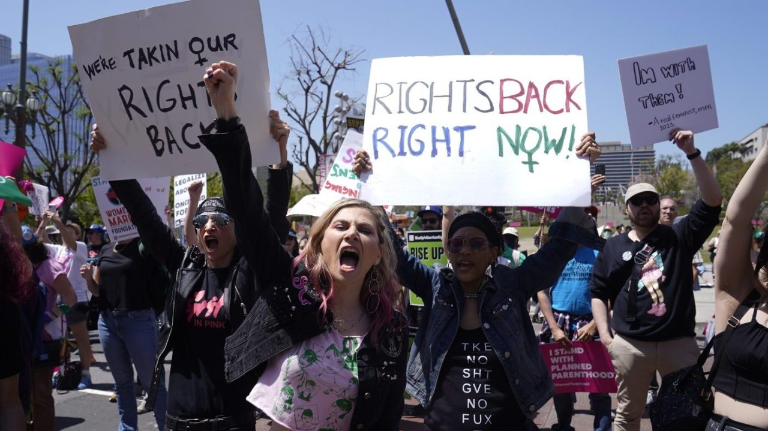













Have you guys seen this? It's a campaign blaming the people that dare to want to use 3rd party apps. Don't forget, most of them are gone. There's no defending about why 3rd party apps are just better. Nope. It's the exact same as the covid propaganda, but proreddit this time.
Removing your own comments is being called, " destroying data".
More info
https://www.reddit.com/r/wow/comments/149b6ss/a_partial_reopening_and_our_next_moves/


I had been temp banned at least 10x. I have no idea. Being permanently banned was great for my productivity.
For those of you that intend to go back. Download the Reddit app apk, and use an app like lucky patcher to remove all the bullshit. You may get lucky and someone will do it for you. Modded apk does not require root on android.
I don't know how to assist you on apple. Perhaps someone in the comments will.