when people try and analyze the origin of Christianity and Jesus they start from the 1st century and continue into modern times. well what if antiquity is just a phantom duplicate of the middle ages? then we should be able to find Jesus in the middle ages?
if our timeline is altered then we cant start from the beginning and look forward. we have to start from the present day slowly walk backwards to find the origin of Jesus and Christianity. when you do this the secret reviles itself
Modern Christianity was birthed from the reformation and martin Luther in the 1600s. martin Luther got his ideas from a man named Jan Hus. jan hus lived in the 1400s and fought against the corruption of the catholic church. Jan hus got his ideas from a man named John Wycliffe. wycliffe lived thru the great calamity and seen the church take over and become corrupt. wycliffe himself was influenced by the churches genocide of the cathars in the 1300s and 1200s. the cathers were birthed from a small group called the bogomils. the bogomils spread after the leader was burned at the stake in Constantinople. there leaders name was basil and he is origin point for modern Christianity
Direct Similarities
Both had 12 apostles / disciples Jesus: 12 chosen apostles who spread his teachings. Basil: Explicitly had 12 apostles sent out to preach his dualist heresy (Anna Komnene, Alexiad, Book XV).
Both preached against the ruling religious class / hierarchy Jesus: Overturned tables in the temple, called Pharisees “brood of vipers,” rejected legalistic religion. Basil: Called the Orthodox Church a “den of demons,” rejected priests, sacraments, icons, and hierarchy as tools of Satan.
Both were betrayed by one of their own followers Jesus: Betrayed by Judas Iscariot, one of the 12. Basil: Betrayed by Dositheus, one of his 12 apostles, who turned informer to Emperor Alexios I.
Both were imprisoned before execution Jesus: Arrested in Gethsemane, held overnight at Caiaphas’s house, guarded, mocked, and beaten (Matthew 26:57–68, Mark 14:53–65, Luke 22:54–71, John 18:12–27). Basil: Arrested after betrayal, imprisoned in Constantinople, held and interrogated by Emperor Alexios I.
Both held a final shared meal with followers while imprisoned Jesus: The Last Supper — bread and wine, teachings, betrayal foretold. Basil: In prison, he and his followers “held secret meetings, sharing bread and teachings” (Anna Komnene).
Both refused to recant their teachings under trial Jesus: Before Pilate and the Sanhedrin, stood firm on his identity and mission. Basil: Refused Emperor Alexios I’s offer of clemency, denounced the Church as a “synagogue of Satan.”
Both were publicly executed as heretics / blasphemers Jesus: Crucified publicly as a threat to religious and Roman authority. Basil: Burned at the stake publicly at the Hippodrome in Constantinople as a heretic.
Both left behind a movement that spread despite persecution Jesus: Apostles spread Christianity after his death. Basil: Bogomil teachings spread across Balkans and into Western Europe (Cathars, Lollards, Hussites, reformers).


Certainly! Combining A.T. Fomenko's New Chronology and the Irish Origins of Civilization theory into a single, unified historical narrative would create a fascinating and highly speculative alternative history. This thought experiment would blend Fomenko's radical revision of historical timelines with Michael Tsarion's claim that Ireland was the cradle of global civilization. Here's how such a combined timeline might look:
Key Principles of the Combined Theory Ireland as the Center of Civilization: Ireland was the heart of an advanced prehistoric culture, possibly linked to Atlantis, which preserved and spread knowledge globally.
Compressed Timeline: Much of what is considered "ancient" history actually occurred during the Middle Ages, as per Fomenko's New Chronology.
Global Empire: A single, vast "Empire" (as Fomenko describes) dominated the world until the 16th century, with Ireland playing a central role in its formation and governance.
Druidic Wisdom: The Druids of Ireland were the keepers of esoteric knowledge, which influenced the development of other civilizations.
Combined Historical Timeline
- Prehistoric Ireland (Before 10,000 BCE) Atlantean Connection: Survivors of Atlantis settled in Ireland after the cataclysm, bringing advanced knowledge of astronomy, architecture, and spirituality.
Megalithic Monuments: Sites like Newgrange and Knowth were built as repositories of ancient wisdom, aligning with astronomical events and encoding sacred knowledge.
Druidic Tradition: The Druids emerged as the guardians of this knowledge, preserving it through oral traditions and symbolic art.
- The Global Empire (10,000 BCE–1500 CE) Ireland as the Center: Ireland became the heart of a global "Empire" that spanned Eurasia and beyond. This Empire was governed by a priestly class of Druids who maintained order and spread knowledge.
Spread of Civilization: Irish settlers and Druids traveled to other parts of the world, establishing colonies and influencing the development of cultures such as Egypt, Mesopotamia, India, and China.
Egypt: The pyramids and Egyptian mythology were inspired by Irish Druidic knowledge.
Mesopotamia: The Sumerians and Babylonians inherited agricultural techniques and spiritual practices from Irish settlers.
India: The Vedic texts contain echoes of Irish wisdom, brought by migrating tribes.
Roman Empire as a Duplicate: The traditional Roman Empire is a later duplicate of this global Empire, with its peak in the 13th–14th centuries CE.
- The Middle Ages (500–1500 CE) Compressed Timeline: Most of what is considered "ancient" history actually occurred during this period.
Trojan War: Redated to the 13th century CE, the Trojan War was a medieval conflict involving Irish-influenced cultures.
Jesus Christ: The life of Jesus Christ occurred in the 11th–12th centuries CE, with connections to Irish Druidic traditions. Fomenko's identification of Jesus with figures like Pope Gregory VII and Andronikos I Komnenos is reinterpreted to include Irish influences.
Crusades: The Crusades were part of the expansion and defense of the global Empire, with Irish Druids playing a key role in guiding these efforts.
Celtic Migrations: The Celts, as descendants of the ancient Irish civilization, spread across Europe, carrying with them the knowledge and traditions of their ancestors.
- The Fragmentation of the Empire (1500–1800 CE) Collapse of the Empire: The global Empire began to fragment in the 16th century, leading to the rise of modern nation-states.
Ivan the Terrible: As in Fomenko's New Chronology, Ivan the Terrible is seen as a key figure in the fragmentation of the Empire.
Reformation and Renaissance: The Protestant Reformation and the Renaissance were movements that sought to break away from the centralized control of the Empire, while also inventing a fictional "ancient" past to legitimize new identities.
Suppression of Irish Knowledge: The Christianization of Ireland and subsequent colonization efforts suppressed Druidic knowledge and obscured Ireland's role as the cradle of civilization.
- Modern Era (1800 CE–Present) Rediscovery of Irish Origins: In the modern era, alternative researchers and archaeologists have begun to uncover the true history of Ireland's central role in global civilization.
Symbolic Revival: The resurgence of interest in Celtic mythology, Druidic traditions, and megalithic sites reflects a growing awareness of Ireland's ancient legacy.
Key Events in the Combined Timeline Before 10,000 BCE: Advanced civilization in Ireland, influenced by Atlantean survivors.
10,000 BCE–1500 CE: Ireland as the center of a global Empire, with Druids spreading knowledge worldwide.
500–1500 CE: Compressed timeline of "ancient" history, with events like the Trojan War and the life of Jesus occurring in the Middle Ages.
1500–1800 CE: Fragmentation of the Empire and suppression of Irish knowledge.
1800 CE–Present: Rediscovery of Ireland's ancient origins and legacy.
Criticism and Challenges Lack of Evidence: Both theories rely on speculative interpretations and lack credible archaeological or historical evidence.
Methodological Issues: Fomenko's use of astronomical data and Tsarion's reliance on mythological symbolism are often criticized as flawed or selective.
Conspiracy Elements: The combined theory would likely involve even more elaborate conspiracy claims, which many find implausible.
Conclusion This thought experiment combines the radical timeline revisions of Fomenko's New Chronology with the imaginative claims of the Irish Origins of Civilization theory. The result is a highly speculative narrative in which Ireland is the center of a global Empire that shaped the development of world civilizations. While this combined theory is intriguing and creative, it remains firmly in the realm of alternative history and is not supported by mainstream scholarship. It serves as an interesting exercise in reimagining history but should be approached with a critical and open mind.
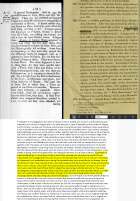
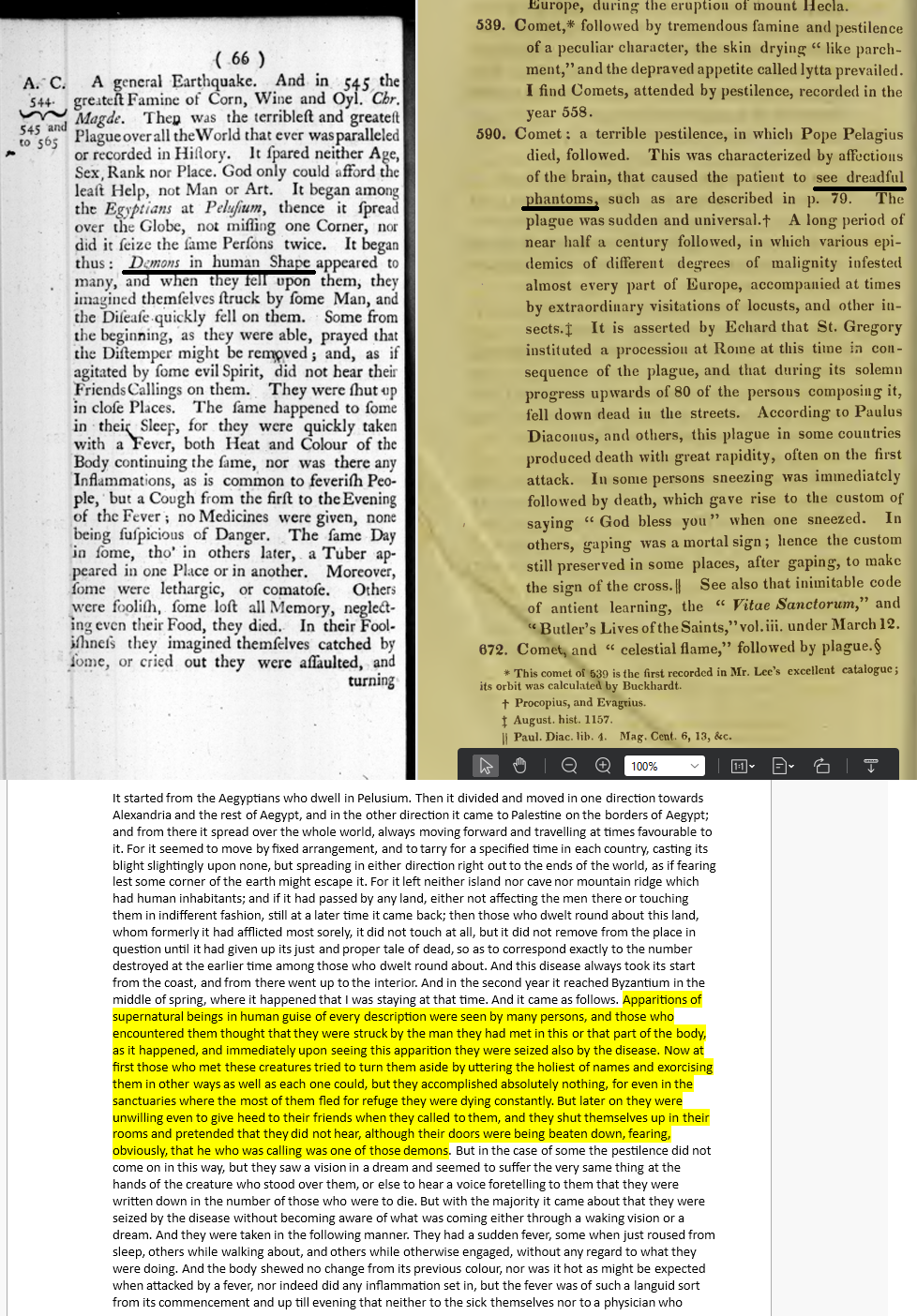
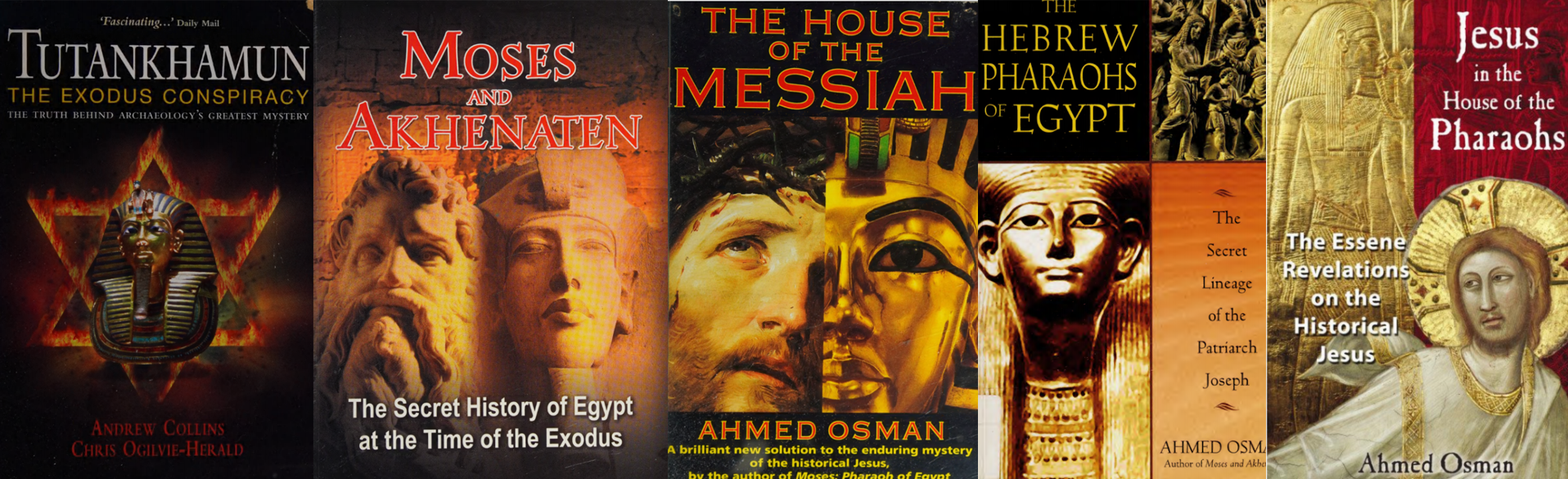
All books can be found at annas-archive DOT org. No single person has this all figured out, each author has there own conclusion but even though non agree they all bring something to the table.
the Irish origins of civilization Vol 1 and 2 - This book is must read for anyone interested in alt history. the sheer amount of knowledge is priceless. The first book to introduce you to the Irish/ Scottish Egyptian connection and the Celtic druids
the riddle of prehistoric Britain - another book that builds off of the last and just as valuable for the sheer amount of information. the main focus is the pre Celtic proto European peoples. there spread after a great disaster and how they spawned the first European societies.
history science or fiction - this book (or series) tackles everything from our current dating methods to the complete fabrication (thru duplication) of our historical chronology. its dense but monumental. no one reads Fomenko without having a complete historical perspective change.
Moses and Akhenaten the secret history of Egypt at the time of the Exodus - our modern historical chronology is built off of the biblical timeline and chronology. A.D. and B.C. are Before Christ and Anno Domini (in the year of our lord). Since this is the case its important to understand who the main players in the bible actually were even though we may not know exactly when this happened.
the Alexiad (primarily book 10) - this is a series of small books written by a Byzantium princess 900 years ago who lived in Constantinople. She writes about a man, a man that went against the high priests and empires teaching, He called the church the "Den of Devils". He had 12 apostles and was publicly put to death after one betrayed him. His death would be the catalyst for a religious revolution which would evolve into the cathar movement, which would later influence John Wycliffe's anti catholic church writing's after the black death. His work influenced the Jan Hus and the hussites who them selves would live on with martin Luther and the protestant reformation
Albert Pike - The Third World War must be fomented by taking advantage of the differences caused by the 'agentur' of the 'Illuminati' between the political Zionists and the leaders of Islamic World. The war must be conducted in such a way that Islam (the Moslem Arabic World) and political Zionism (the State of Israel) mutually destroy each other.
Meanwhile the other nations, once more divided on this issue will be constrained to fight to the point of complete physical, moral, spiritual and economical exhaustion then We shall unleash the Nihilists and the atheists, and we shall provoke a formidable social cataclysm which in all its horror will show clearly to the nations the effect of absolute atheism, origin of savagery and of the most bloody turmoil.
Then everywhere, the citizens, obliged to defend themselves against the world minority of revolutionaries, will exterminate those destroyers of civilization, and the multitude, disillusioned with Christianity, whose deistic spirits will from that moment be without compass or direction, anxious for an ideal, but without knowing where to render its adoration, will receive the true light through the universal manifestation of the pure doctrine of Lucifer, brought finally out in the public view. This manifestation will result from the general reactionary movement which will follow the destruction of Christianity and atheism, both conquered and exterminated at the same time






so first of we have to establish some facts. was there a person named Jesus Christ?
well, the letter J was invented in the 16th century. before this time the named used was Yehoshua or the shorter version Yeshua (which itself means "Yahweh is salvation"). So in both the OT and the NT there is a person named Yeshua. When they invented the letter J they made up the name Jesus cus scribes in the high middle ages assumed there were 2 different people. 95% of the population couldn't not read or write. The ones with access to the actual codex's and manuscripts was less then 1% of the population. easy for change to take place.
Yeshua actually translates to Joshua in modern English. In the old testament we see this. Joshua Son of nun was the Israelite high priest, the one to lead after Moses and the exodus. Now see many old books like antiquity of the Jews (200AD) and the Talmud (500AD) also refer to NT "Jesus" as the son of nun. So TLDR the new testament and the old testament are essentially about the same person. And Talmudic jews dont accept Jesus because they know the character isn't real, hes allegorical and loosely based off of there own high priest of the Hebrew old testament.
Lets go deeper.
Modern scholars and archology have come to the conclusion that many aspect of Christianly predate the birth of Christ. The Cross is a symbol from ancient Egypt along with the rest of the symbology. The mythology of resurrection, the idea of monotheism all comes from Egypt.
Not just Egypt though, it comes from the 18TH dynasty of Egypt. Aten. Akhenaton is an interesting person. Most well known and revered pharaoh of Egypt, He ushered in the idea of one god. The all mighty aten (or the sun for laymen). Tore down the old temples and made people worship him because he was the one who god spoke thru. (first actual pope)
His whole dynasty was eventually run out of Egypt and many have concluded that exodus from the old testament is actually about the Akhenaton and his family. the armana letters mention important biblical peoples indicating that those two events, the exodus and the 18th dynasty take place at the same time in the same area (when ever that may have actually been). Some scholars even go the length to say Moses was Akhenaton. Regardless of the details the conclusions are sounds. The biblical story of moses is connected to the historical 18th dynasty.
Akhenaton Had a son or successor. King tutenkamun or Tut for short. Moses also had a successor, Joshua. or Yeshua. we have a possible connection between the biblical Joshua of the OT and king tut. Is there a connection between the NT Jesus and King tut?
One of the first Gnostic Christian religions and the only one to have wide spread reach was Manichaeism, dualistic religion founded by the Persian prophet Mani. It combined elements from various religious traditions, including Zoroastrianism, Christianity, Buddhism, and Babylonian myths. Its all about the eternal struggle between the forces of light and darkness. Mani claimed to BE the Christ's apostle of light.. Who was the Christ to them? King Tutankhamen!
So OT Joshua, NT Jesus, and king tut are all the same person. The OT comes from Egypt. New testament was written some time after the fact. Everyone agrees that the new testament was written well after the events of "Jesus"(yeshua, joshuas) life. meaning it had to be originally oral testimonies from early gnostic groups (like manis) which made it into cannon when the LXX was being complied. See the thing about Gnostics are that they believe the scripts were ALLAGORICAL. They were stories based on real people that were meant to teach or relay deeper meaning. this is why the setting between the OT and the NT are different. the OT is a take on the life of Joshua(tut) the high priest of the Israelites. The NT and jesus christ (joshua,tut) are allegorical stories that use Joshua as the character but take place during the writers setting and perspective.
Its also interesting to note that Christ comes from greece and originally ment "to be anointed" or "the anointed one". soooo we have a Yeshua the high preist of Israelites, and a Yeshua the anointed one. come one now its all the same person.
the history of this early stage of Christianity was hidden and eliminated by the papacy and the Catholicism. Any free thinking person or gnostic group was violently delt with leaving only roman Catholicism in the west and eastern orthodoxy in the east. which worked in tandem to form the Roman universal church.
there are people out there who with shout at there top of lungs that Christians are not catholic! they are different!. Yes, but you have ALL been deceived by the lamb of god. A wolf in sheeps clothing.
if your a Christian i plead with you. listen to my words because truth fears no investigation.
the messiah you worship is non other then the Jewish high priest who leads "gods chosen people".
the only reason we arnt all catholic is because of one man. See the biblical historical jesus is fake. but if you trace back thru time the teachings and idea of this allegorical character "Jesus" and modern christens, you find something.
there is a light in all this darkness and deception. because when you peel away the pages of history the secret reveals itself. Most say modern Christianity is only here because of Martin Luther and protestant reformation. But what influenced him to go against the church? An idea. the idea was that people should have the ability to think for themselves and corrupt individuals and there establishment have no right dictating peoples beliefs. and sometimes, you have to make a stand no matter the cost.
this idea, a powerful idea, can itself be traced back to one starting point. Martin Luther got this idea from the writings of the followers of Jan Hus, a man put to death for this same reason in the 1400s. both burned at the stake 150 years apart.
Jan hus, he got this idea from the writings of the Lolards and John Wycliffe. John lived thru the black death. John seen the power the church gained in England and abroad, he saw the corruption grow first hand. From the bloody massacrers of the gnostic inquisition to the wealth and power gained after the black death. John dedicated his life to translating the bible out of latin so normal people could read it for themselves. The reason you can hold that book in your hand comes from him.
but this "idea" precedes even him. Before the black death the church spent 200 years killing every single person with "wrong think" against the them. They burned whole cities with woman and children to kill this idea.
the cathers were one such group. They seen the church wage holy wars no different then raiders. they saw the church drown and burn children. they saw the church as the enemy and had no problem dying for there views. They saw the the Cristian god as the demiurge. the god who created this materialistic sink hole we call reality. they wanted no part in this power struggle were greed and ruthlessness was rewarded.
if you keep going youll find yourself at one point in time. see like the rest, The cathers who lived 1200-1350 got there ideas and concepts from someone else. at the very end of this trail you find one man
A simple man, no different from you or me. A man who who thought for himself and taught others to do the same. A man who seen evil in the Church. He saw the corruption of this "high priest" and office that represents him.
and there is one source, in the entire world that writes about him. the alexid.
Hes name was not jesus, not Joshua. Modern Christian dont know of his existence even though they follow his legacy. His name was Basil and he lived around 1100ad near Constanopal. he was a simple monk who had 12 apostles. He was influenced by Mani's ascetism but did not recognize there high priest (Joshua) in the same messianic way the church viewed him.
The eastern roman emperor decided to start a religious reform and sent guards to find basil. one of his apostles betrayed him and he was brought to the emperor. the emperor Alexios I Komnenos pretended that he was interested in basil views but had numerus witness ready to transcribe the convo as evidence of heresy, who were all hiding behind a false wall.
do you know what Basil told the emperor about his church? it was "The temple of devils". or the synagogue of Satan. sound familiar? he was imprisoned and eventually burned in front of tens of thousands of people at the hippodrome.
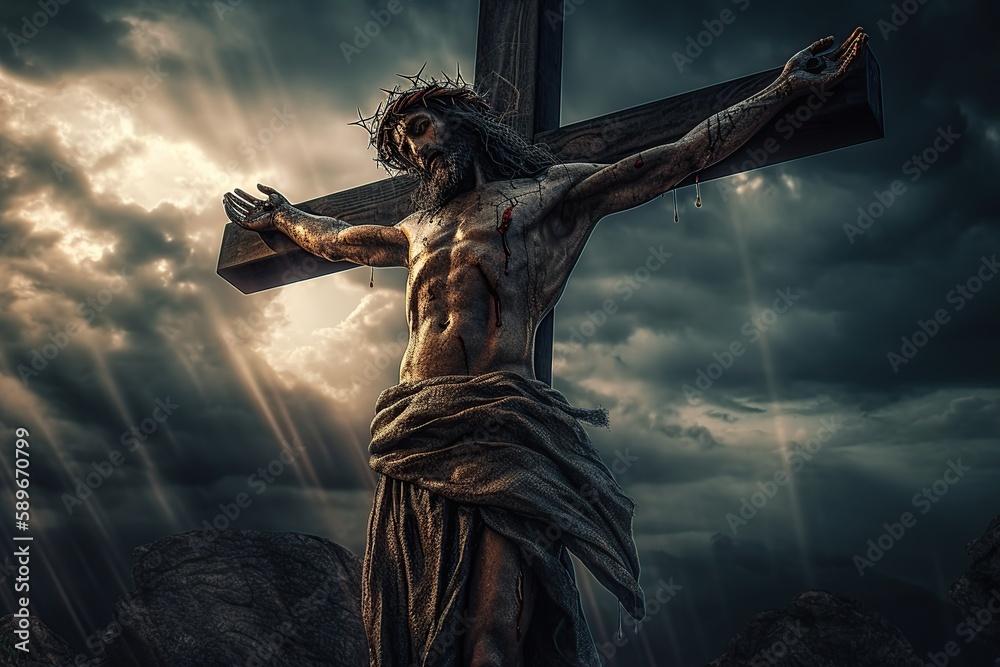
did you know that the word used in the LXX (greek OT and NT) for Cross has multiple meanings? The word is directly translated as wood but changes depending on the context. It essentially means Jesus was put to death on wood. it could be a wooden cross, it could be a tree (like some Celtic Christian beliefs) it could also be a pyre. a pile of wood for a burning. food for thought.
even at the moment of death he was steadfast and strong in his resolve. fearless, because he knew he was right, and he would face his creator with his pride and self respect intact. This simple monk, with his resolve would go onto trigger the rise of cathers, and in turn the gnostic inquisition, which itself lead to John Wycliffe and lolards making the bible accessible to everyone. John would pass the torch to the next generation by triggering Jan hus and his followers causing a full fledge war. there legacy would then go on manifest itself within martin luther and protestant reformation.
the reasons Christians can even say there different then Catholics is because Basil stood up and gave his life for an Idea. Not some biblical person arbitrarily named jesus. It was basil, a real life, free thinking man no different then you or me. a man so strong in his resolve that he faced death with a smile on face.
if there's any one person that actually lived who is worthy of walking in the shadow of, its this man. Basil the leader of the Bogomils.


UNDER YOUR FUKING FEET! Now go out side and touch grass. your welcome.