The word "divoc" could be considered close to an existing word—but is not itself a word in Hebrew.
"I think the word that people may be thinking of is דיבוק dibbuk (often spelt dybbuk in English), which is a Jewish concept (popular in folk culture) of the spirit of a dead person that possesses a living person because they have unfinished business and want to speak through the living person," Lily Kahn, a professor of Hebrew and Jewish languages at University College London, told Newsweek.
Im not really buying this though, do we even have anyone here who is knowledgeable in hebrew.
Its exact pronunciation is mentioned here: https://www.youtube.com/watch?v=aFpn3Cv2CE4 You can listen to the exact pronunciation and make up your mind if it can be spelled as "divoc" or not. I'd say it would be a pretty good spelling. Spelling words from languages translated into English is always a matter of convention because the spelling always misses out on the original language.


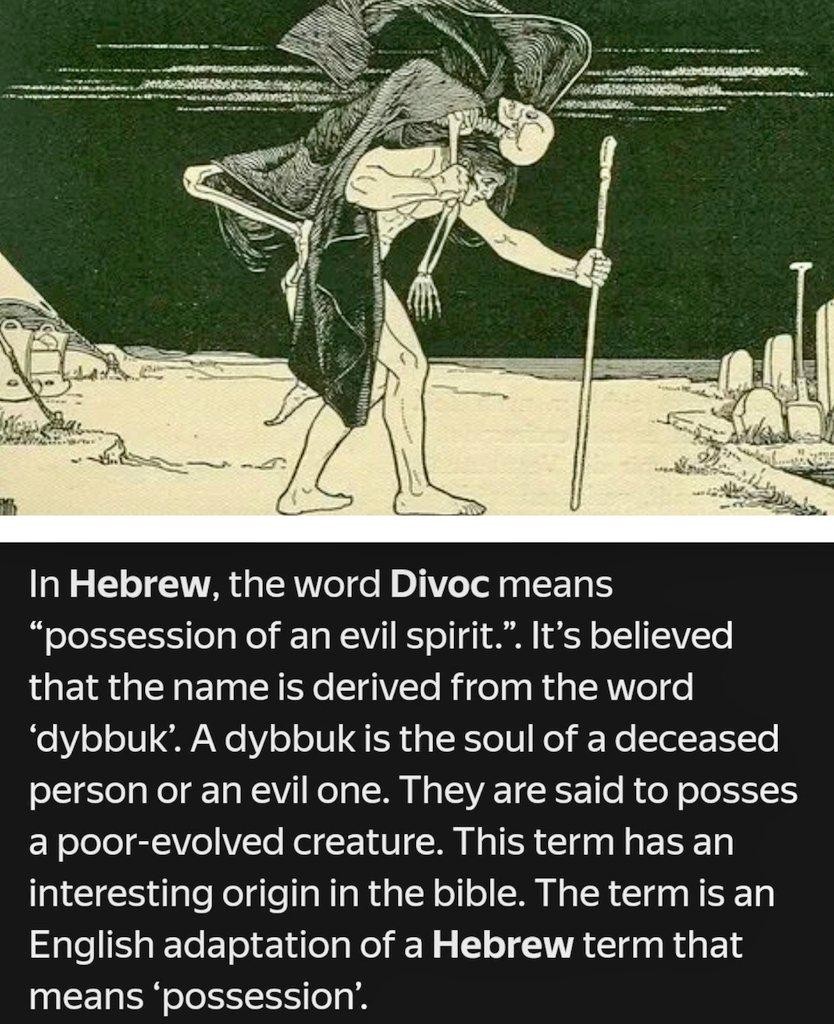

Original twitter post: https://x.com/DecentraliseP/status/1862839478282502287
And yes, it seems they do sometimes spell it as Divoc: https://www.quora.com/What-does-divoc-mean-in-Hebrew
https://jewish.shop/37046/what-does-divoc-mean-in-hebrew/
The last link have been scratched but you can still access it using Archive.is and Archive.org
https://archive.is/vfzUV
https://web.archive.org/web/20230602011737/https://jewish.shop/37046/what-does-divoc-mean-in-hebrew/
Nice catch. I like how its been "debunked".
https://www.newsweek.com/fact-check-divoc-covid-hebrew-yiddish-1623317
Im not really buying this though, do we even have anyone here who is knowledgeable in hebrew.
The fact they deleted this link:https://jewish.shop/37046/what-does-divoc-mean-in-hebrew/ is telling.
Its exact pronunciation is mentioned here: https://www.youtube.com/watch?v=aFpn3Cv2CE4 You can listen to the exact pronunciation and make up your mind if it can be spelled as "divoc" or not. I'd say it would be a pretty good spelling. Spelling words from languages translated into English is always a matter of convention because the spelling always misses out on the original language.