I've already pointed out that NASA could have used the drone to blow some dust off the solar panels to improve charging ability. Basically they could do that by simply hovering the drone over the panels, or even landing it on a panel and running the lift rotor / fans. Their control is good enough to do it, and assisted by a lot of position sensors (there is no GPS on Mars of course). While not a perfect method, it would restore some sunlight access.
They have plenty of people at JPL, which runs the mission. However, they fired the ones who refused to get the kill jab, so my guess is the team is somewhat dimmer.
Added: I forgot - Martian gravity is much lower than Earth. Which means dust is proportionately lighter. Hence it should be quite easy to blow it off panels. Which makes me wonder why NASA is claiming it is so hard to remove the dust coating. But now we come to the next factor: Martian atmosphere is thinner, meaning it cannot carry as much force as it is blown. Which means the drone air push would be proportionally reduced. I can see that a drone designed to operate on Mars has two key factors: lighter weight from lower gravity, but in thinner air so it needs large propellers or higher speed.
In hindsight, NASA should have given the robotic arm a wiping pad to use.
You bring up a good thought. Mars air is extremely dry. In such a case we have to consider electrostatic attraction as a factor. With no water to dissipate charge buildup on dust, like fine dust, it could tend to stick to surfaces. If so, then wouldn''t we see it on cameras lenses or their cover shields? Also, might it clog moving parts over time, impeding rover wheels? I don't know.
If there is some cool science going on like electrostatic adhesion, why isn't a agency devoted to science education not talking about it? You are not the only person to point out this idea of blowing the panels clean. Not explaining themselves makes them look incompetent and wasteful.
The last decade has been devastating to NASA competence. At JPL, people quit starting in Obama era after NASA forced Caltech (which runs JPL) to institute clearance checks higher than necessary. After that, they mandated covid shots or get fired. So people left. I see it as a drain of the smarter independent people. When I was there, there was an undercurrent of achiever-political mindset in management, leading to stupidity in some areas. Not all but enough. I don't know whether the Mars mission has dumb people on staff, probably not all but maybe some. I do know that Caltech hence JPL is undercut by political correctness now, and some equal opportunity hires, which is deadly for engineering and science. For instance, Caltech no longer requires SATs, which is leadign to less qualified student being admitted. If JPL HR is now more SJW, that will bring in stupid people.

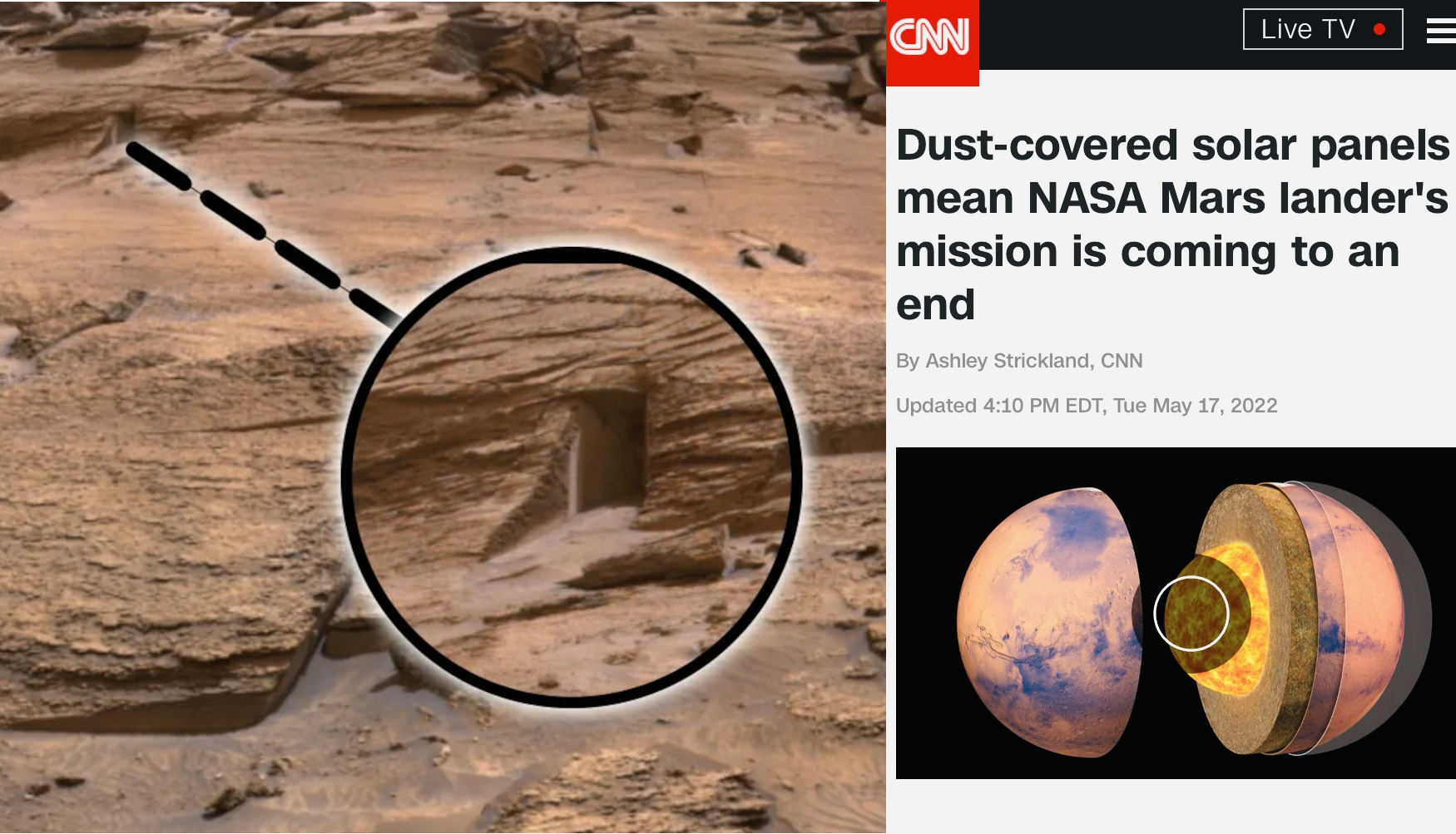
I've already pointed out that NASA could have used the drone to blow some dust off the solar panels to improve charging ability. Basically they could do that by simply hovering the drone over the panels, or even landing it on a panel and running the lift rotor / fans. Their control is good enough to do it, and assisted by a lot of position sensors (there is no GPS on Mars of course). While not a perfect method, it would restore some sunlight access.
They have plenty of people at JPL, which runs the mission. However, they fired the ones who refused to get the kill jab, so my guess is the team is somewhat dimmer.
Added: I forgot - Martian gravity is much lower than Earth. Which means dust is proportionately lighter. Hence it should be quite easy to blow it off panels. Which makes me wonder why NASA is claiming it is so hard to remove the dust coating. But now we come to the next factor: Martian atmosphere is thinner, meaning it cannot carry as much force as it is blown. Which means the drone air push would be proportionally reduced. I can see that a drone designed to operate on Mars has two key factors: lighter weight from lower gravity, but in thinner air so it needs large propellers or higher speed.
In hindsight, NASA should have given the robotic arm a wiping pad to use.
Is the dust something "stickier" like silica dust or something?
You bring up a good thought. Mars air is extremely dry. In such a case we have to consider electrostatic attraction as a factor. With no water to dissipate charge buildup on dust, like fine dust, it could tend to stick to surfaces. If so, then wouldn''t we see it on cameras lenses or their cover shields? Also, might it clog moving parts over time, impeding rover wheels? I don't know.
Both cases are terrible for NASA's missions.
If there is some cool science going on like electrostatic adhesion, why isn't a agency devoted to science education not talking about it? You are not the only person to point out this idea of blowing the panels clean. Not explaining themselves makes them look incompetent and wasteful.
The last decade has been devastating to NASA competence. At JPL, people quit starting in Obama era after NASA forced Caltech (which runs JPL) to institute clearance checks higher than necessary. After that, they mandated covid shots or get fired. So people left. I see it as a drain of the smarter independent people. When I was there, there was an undercurrent of achiever-political mindset in management, leading to stupidity in some areas. Not all but enough. I don't know whether the Mars mission has dumb people on staff, probably not all but maybe some. I do know that Caltech hence JPL is undercut by political correctness now, and some equal opportunity hires, which is deadly for engineering and science. For instance, Caltech no longer requires SATs, which is leadign to less qualified student being admitted. If JPL HR is now more SJW, that will bring in stupid people.