It's pretty mundane. I did this 20 years ago in college. There are a bunch of interesting papers on how/why this happens. There was an old youtube video where someone adds a match and jar too in order to see how long the plasma can persist.
Plasma is interesting, but for plasma to be useful in a reactor, you need a continual sustained reaction. That's the idea behind fusion. The ITER is an European reactor that's experimenting in this space and there was a Japanese one that had some tests last year. They're all "Tokamak" based reactors and none are close to being production ready.
Even if a fusion reactor becomes self sustainable, the fuel sources (Helium-3, Tritium, etc.) are incredibly difficult to produce. Like self driving cars, it's a tech that's dead long before it started, and people keep pumping the corpse with money hoping it will live.

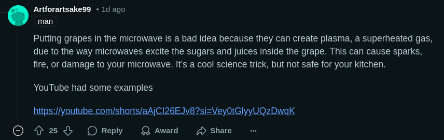
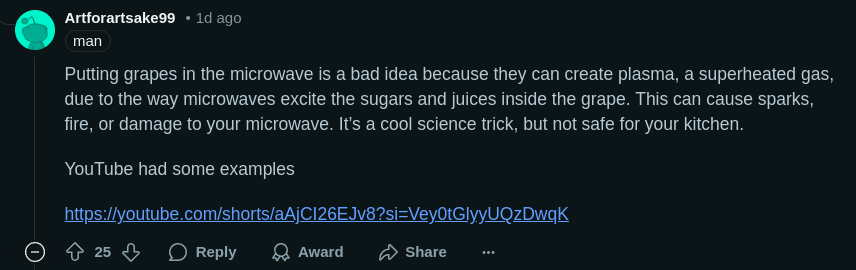
Here is the video: https://youtube.com/shorts/aAjCI26EJv8
Does this give us some insight into a new way of making a plasma? Or is this more mundane than I realize?
It's pretty mundane. I did this 20 years ago in college. There are a bunch of interesting papers on how/why this happens. There was an old youtube video where someone adds a match and jar too in order to see how long the plasma can persist.
Plasma is interesting, but for plasma to be useful in a reactor, you need a continual sustained reaction. That's the idea behind fusion. The ITER is an European reactor that's experimenting in this space and there was a Japanese one that had some tests last year. They're all "Tokamak" based reactors and none are close to being production ready.
Even if a fusion reactor becomes self sustainable, the fuel sources (Helium-3, Tritium, etc.) are incredibly difficult to produce. Like self driving cars, it's a tech that's dead long before it started, and people keep pumping the corpse with money hoping it will live.